Pancreatic cancer ranks among the deadliest cancers in the United States, causing a significant number of cancer-related deaths each year for both men and women (Grigorescu et al 2024). Its silent progression and late diagnosis often make treatment difficult, which is why understanding the risk factors is crucial. Knowing what increases your chances of developing pancreatic cancer can help you take steps to reduce your risk and protect your health.
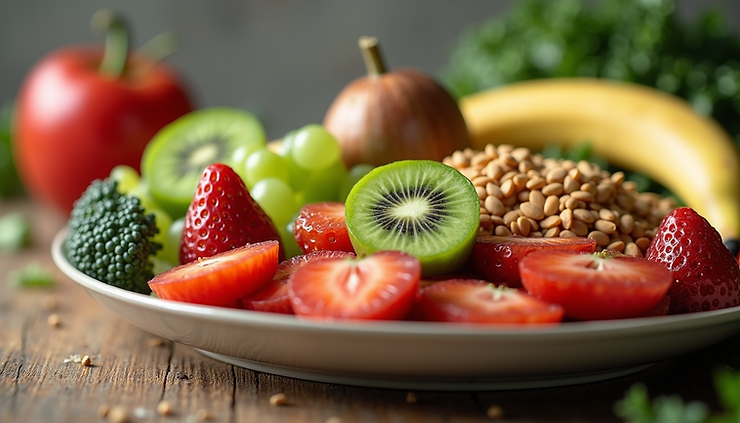
A close-up of a healthy meal featuring fresh fruits and vegetables, highlighting the importance of diet in cancer prevention
Key Modifiable Risk Factors for Pancreatic Cancer
Several lifestyle and medical factors contribute to the risk of developing pancreatic cancer. Some of these you can control, while others, like genetics, are beyond your influence. There are numerous risk factors being studied and established. Here’s a detailed look at the main risk factors:
Cigarette Smoking
Smoking is the most significant preventable risk factor for pancreatic cancer (Iodice et al., 2008, Bosetti et al., 2012). Chemicals in tobacco smoke damage the DNA of pancreatic cells, increasing the chance of cancerous changes (Duell 2012). Studies show that smokers are about twice as likely to develop pancreatic cancer compared to non-smokers (Lynch et al., 2009). Quitting smoking reduces this risk over time, making it one of the most effective ways to protect yourself (Carreras-Torres et al., 2017).
Obesity and Sedentary Behavior
Carrying excess body weight raises the risk of pancreatic cancer (Carreras-Torres et al 2017, Michaud et al., 2001). Fat (adipose) tissue produces hormones and inflammatory substances that may promote cancer growth (Eibl G, Rozengurt 2021). A sedentary lifestyle, with little physical activity, often leads to obesity and worsens this risk (Carreras-Torres et al., 2017). Regular exercise helps maintain a healthy weight and supports overall pancreatic health (Heiskanen et al., 2018).
Poor Diet
Diets high in processed meats, sugary foods, processed foods, and unhealthy fats can increase pancreatic cancer risk (Lu et al., 2017). Conversely, a healthy dietary pattern including plenty of fruits, vegetables, whole grains, nuts, and fish can be protective against pancreas cancer (Lu et al., 2017).
Poor Gut Health
The health of your digestive system plays a role in pancreatic cancer risk (Bastos et al., 2023). Studies investigating the link between the gut microbiome and pancreatic cancer have shown that the structure of the gut microbial communities of pancreatic cancer patients is clearly distinct from that of healthy controls (Nagata et al., 2022, Matsukawa et al., 2021). Research shows that poor gut health can be linked to pancreas cancer by increasing DNA damage, changing the environment in which cancer can grow, increasing inflammation, impairing the body’s ability to fight cancer cells (Bastos et al., 2023) Maintaining good gut health can potentially reduce your risk of pancreas cancer.
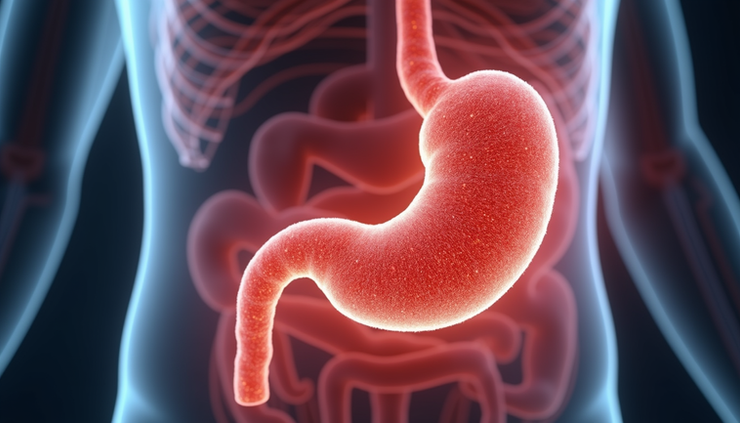
Medical illustration of the pancreas and nearby organs, emphasizing the location affected by pancreatic cancer
Chronic Pancreatitis
Chronic inflammation of the pancreas, known as pancreatitis, increases the risk of pancreatic cancer (Grigorescu et al., 2024). This condition can result from long-term alcohol use, gallstones, or genetics (Roberts et al. 2017). Managing pancreatitis through medical care and lifestyle changes is important to lower cancer risk.
Heavy Alcohol Consumption
Drinking large amounts of alcohol regularly can lead to chronic pancreatitis and liver damage, both of which raise pancreatic cancer risk (Roberts et al. 2017). Studies show that heavy drinking can increase risk of pancreas cancer (Lu et al., 2017). Limiting alcohol intake to moderate levels or abstaining altogether supports pancreatic health.
Infections
There are links to hepatitis B (Hassan et al., 2008) and hepatitis C (Mahale et al., 2017) and increased risk of pancreas cancer. Getting screened for these infections and seeking treatment might decrease your risk of pancreas cancer and other risks associated with these infections.
Non – Modifiable Risk Factors for Pancreatic Cancer
Genetics and Family History
A family history of pancreatic cancer or inherited genetic mutations can increase your risk. About 10% of pancreatic cancers are linked to inherited factors (Klein et al., 2001, Olson & Kurtz 2013). If pancreatic cancer runs in your family, discussing genetic counseling and screening options with your healthcare provider is advisable.
Age and Sex
Pancreas cancer can develop at any age but frequently occurs between ages 60-80 years (Ansari et al. 2019, Ansari et al. 2016, Stark et al. 2016). Of interest as the world’s population continues to age the rates of pancreatic cancer are expected to rise (Newgard et al. 2013). The rates for pancreas cancer are higher in men than in women (Raimondi et al., 2007) The reason why there is a difference between the sexes is not entirely known
How to Protect Yourself from Pancreatic Cancer
Understanding these risk factors allows you to take practical steps to reduce your chances of developing pancreatic cancer:
Quit smoking and avoid exposure to secondhand smoke.
Maintain a healthy weight through balanced diet and regular exercise.
Eat a diet rich in fruits, vegetables, legumes, nuts, fish, focusing on whole foods rather than processed items.
Limit alcohol consumption to light levels or avoid it.
Maintain good gut health but eating a diet rich in a diversity of prebiotics and probiotics.
Manage chronic conditions like pancreatitis with medical guidance and reduction in alcohol and improve dietary habits.
Get screened and treated for infections such as hepatitis B and C.
Know your family history and seek genetic advice if needed.
High angle view of a person jogging outdoors, illustrating the role of physical activity in reducing cancer risk
References
Ansari D., Althini C., Ohlsson H., Andersson R. Early-onset pancreatic cancer: A population-based study using the SEER registry. Langenbecks Arch. Surg. 2019;404:565–571.
Ansari D., Tingstedt B., Andersson B., Holmquist F., Sturesson C., Williamsson C., Sasor A., Borg D., Bauden M., Andersson R. Pancreatic cancer: Yesterday, today and tomorrow. Future Oncol. 2016;12:1929–1946.
Bastos AR, Pereira-Marques J, Ferreira RM, Figueiredo C. Harnessing the Microbiome to Reduce Pancreatic Cancer Burden. Cancers (Basel). 2023 May 5;15(9):2629.
Bosetti C., Lucenteforte E., Silverman D.T., Petersen G., Bracci P.M., Ji B.T., Negri E., Li D., Risch H.A., Olson S.H., et al. Cigarette smoking and pancreatic cancer: An analysis from the International Pancreatic Cancer Case-Control Consortium (Panc4) Ann. Oncol. 2012;23:1880–1888.
Heiskanen MA, Motiani KK, Mari A, Saunavaara V, Eskelinen JJ, Virtanen KA, Koivumäki M, Löyttyniemi E, Nuutila P, Kalliokoski KK, Hannukainen JC. Exercise training decreases pancreatic fat content and improves beta cell function regardless of baseline glucose tolerance: a randomized controlled trial. Diabetologia. 2018 Aug;61(8):1817-1828.
Iodice S., Gandini S., Maisonneuve P., Lowenfels A.B. Tobacco and the risk of pancreatic cancer: A review and meta-analysis. Langenbecks Arch. Surg. 2008;393:535–545.
Matsukawa H., Iida N., Kitamura K., Terashima T., Seishima J., Makino I., Kannon T., Hosomichi K., Yamashita T., Sakai Y., et al. Dysbiotic Gut Microbiota in Pancreatic Cancer Patients Form Correlation Networks with the Oral Microbiota and Prognostic Factors. Am. J. Cancer Res. 2021;11:3163–3175.
Nagata N., Nishijima S., Kojima Y., Hisada Y., Imbe K., Miyoshi-Akiyama T., Suda W., Kimura M., Aoki R., Sekine K., et al. Metagenomic Identification of Microbial Signatures Predicting Pancreatic Cancer From a Multinational Study. Gastroenterology. 2022;163:222–238.
Newgard C.B., Sharpless N.E. Coming of age: Molecular drivers of aging and therapeutic opportunities. J. Clin. Investig. 2013;123:946–950.
Stark A.P., Sacks G.D., Rochefort M.M., Donahue T.R., Reber H.A., Tomlinson J.S., Dawson D.W., Eibl G., Hines O.J. Long-term Survival in Patients with Pancreatic Ductal Adenocarcinoma. Surgery. 2016;159:1520–1527.
Raimondi S., Maisonneuve P., Löhr J.-M., Lowenfels A.B. Early onset pancreatic cancer: Evidence of a major role for smoking and genetic factors. Cancer Epidemiol. Biomark. Prev. 2007;16:1894–1897.
Roberts S.E., Morrison-Rees S., John A., Williams J.G., Brown T.H., Samuel D.G. The incidence and aetiology of acute pancreatitis across Europe. Pancreatology. 2017;17:155–165.